

Planted Aquarium Blogs
Aquarium Plants 101: Mastering Aquarium Plant Care


I. Introduction
Freshwater planted aquariums are where art meets nature. Imagine a tranquil underwater world filled with lush green foliage, colorful fish gliding between plants, and delicate bubbles rising toward the surface every glance at this living landscape brings a sense of calm and connection to nature.
But planted tanks aren’t just about looks. These vibrant ecosystems also play a crucial role in maintaining water health by absorbing excess nutrients, releasing oxygen, and providing shelter for aquatic life. In fact, a well-maintained planted aquarium is often more stable and balanced than a tank without live plants.
For beginners, however, this hobby can feel overwhelming—questions about fertilizers, lighting, CO₂, and aquarium plants types can easily turn into confusion. That’s where Aquatrition steps in.
At Aquatrition, we’re pioneers in the research and manufacturing of high-quality aquarium plants fertilizer tailored specifically for freshwater setups. Our mission is to make the joy of growing aquarium plants easy, sustainable, and affordable for everyone—from first-time hobbyists to experienced aquascapers. Whether you’re building a serene aquascape in your living room or nurturing a community tank in your office, we’re here to support your journey every step of the way.
With the right tools and knowledge, anyone can enjoy the beauty and benefits of a planted aquarium—and Aquatrition is here to make that possible.

II. Why Choose Live Aquarium Plants?
If you’re thinking about starting a freshwater planted aquarium or upgrading an existing one, adding live aquatic plants is one of the best choices you can make. While artificial decor might seem convenient, real aquarium plants bring your tank to life—both visually and biologically. From enhancing the natural beauty of your setup to supporting the well-being of your fish, aquarium plants offer multiple advantages that go far beyond aesthetics.

They Make Aquarium Naturally Beautiful
There’s nothing quite like the vibrant, organic feel of a planted tank. Live aquarium plants come in various shapes, sizes, and colors—from delicate carpeting plants like Hemianthus callitrichoides to bold background plants like Amazon swords or Vallisneria. As they grow and fill out the space, they create a dynamic, layered aquascape that looks more natural than plastic decor ever could.
With live aquarium plants, one’s aquarium evolves over time—new shoots sprout, leaves sway gently with the current, and your tank becomes a living piece of art. For many hobbyists, watching their aquarium plants thrive is just as satisfying as caring for the fish.
They Improve Water Quality Naturally
One of the most powerful (and often overlooked) benefits of aquarium plants is their ability to act as natural water purifiers. Through the process of photosynthesis, aquatic plants absorb carbon dioxide and waste nutrients like ammonia, nitrites, and nitrates all of which can be harmful to fish if left unchecked.
By using these compounds as fuel for growth, aquarium plants help stabilize the water chemistry and reduce the load on your filtration system. This means fewer water changes, fewer algae outbreaks, and overall healthier conditions for fish.
In addition, plants release oxygen during the day, enriching the water and supporting the biological processes of the tank’s inhabitants. This is especially helpful in densely planted tanks.


They Create a Safe, Enriching Environment for Aquatic Life
Aquatic plants do more than clean the water, they enhance the quality of life for your fish. Many species of aquarium plants, especially those from naturally vegetated habitats, feel safer and less stressed in a tank with aquatic plants.
Aquarium Plants provide:
- Cover and hiding spots, which help reduce aggression and territorial behavior.
- Spawning surfaces for egg-laying species like tetras, gouramis, and barbs.
- Safe zones for fry and shrimp, giving them shelter from predators and strong water currents.
- Play and rest areas—yes, fish enjoy swimming through leaves and resting in shaded areas!
A planted tank allows fish to behave more naturally, leading to brighter colors, more active behavior, and even improved breeding success.
In short, aquatic plants are not just an aesthetic upgrade, they’re a functional and essential part of a healthy freshwater aquarium ecosystem. Whether you’re aiming for a lush aquascape or a low-maintenance planted tank, aquarium plants bring balance, beauty, and biological benefits that every hobbyist—beginner or expert—can appreciate.
III. Types of Aquarium Plants
Choosing the right aquatic plants is one of the most rewarding parts of setting up a freshwater planted aquarium. In aquascaping (the art of arranging hardscape and aquatic plants), aquarium plants are usually classified by where they are placed in the tank foreground, midground, background, or floating.
Each type plays a different role in your layout and in the health of your aquarium. Below is a breakdown to help you understand each category, along with beginner-friendly plant suggestions to make anyone’s first planted tank a success.

1. Foreground Plants (Carpeting Plants)
Foreground plants are the shortest plants in the aquarium. They are placed in the front part of the tank, where they form a “carpet” over the substrate—just like a lawn in your garden. These aquarium plants spread horizontally and cover bare areas, creating a lush, natural base layer.
They’re essential for giving a aquascape that soft, polished look and making the tank feel more complete.
✅ Characteristics:
- Short height (1–5 cm typically)
- Grow outward to cover substrate
- Create a green, natural carpet effect
- Often require medium to high light
- Some species prefer CO₂ supplementation, but many adapt to low-tech setups
🌿 Easy Foreground Plants for Beginners:
- Sagittaria subulata (Dwarf Sagittaria): Hardy and fast-growing; looks like underwater grass.
- Cryptocoryne parva: Low-growing and slow-growing, great for non-CO₂ tanks.
- Marsilea hirsuta: A low-light carpeting plant that spreads slowly, resembling clover.
- Eleocharis acicularis (Dwarf Hairgrass): Very popular for carpeting; needs good light and nutrients.

2.Midground Plants
Midground plants are medium-height plants placed in the center areas or along the sides of your aquarium. They act as a bridge between the low-growing foreground plants and the tall background plants. They help add structure, depth, and contrast to a aquascape.
Midground plants are often used in clusters or individual patches to create focal points, especially around driftwood, rocks, or decorative features.
✅ Characteristics:
- Moderate height (10–30 cm)
- Can be planted in substrate or attached to hardscape
- Create natural transition zones
- Suitable for low to moderate light setups
- Most are hardy and beginner-friendly
🌿 Easy Midground Plants for Beginners:
- Anubias nana / Anubias barteri: Slow-growing, attachable to rocks/wood, very low maintenance.
- Cryptocoryne wendtii: Comes in green, brown, or red; adaptable and ideal for low-light tanks.
- Lobelia cardinalis: Bright green leaves with a compact structure.
- Bucephalandra spp: Small, colorful leaves; attach to hard surfaces and thrive in most conditions.

3. Background Plants
Background plants are the tallest plants in the tank. They’re planted at the back and sides, forming a green “curtain” that provides height, frames your aquascape, and helps conceal equipment like filters or heaters.
Tall aquarium plants give your tank a sense of depth and vertical dimension, making it appear more natural and immersive.
✅ Characteristics:
- Tall growth (30 cm and above)
- Rapid growth in many species
- Provide shade and hiding spaces for fish
- Help absorb excess nutrients to reduce algae
- Ideal for nutrient-rich substrates and regular fertilization
🌿 Easy Background Plants for Beginners:
- Vallisneria spiralis: Ribbon-like leaves, fast grower, great for filling the background quickly.
- Hygrophila polysperma: Hardy and fast-growing; also helps control algae.
- Limnophila sessiliflora: Feathery, soft texture; thrives even in low-tech setups.
- Amazon Sword (Echinodorus amazonicus): Broad leaves and bold appearance, a true beginner favorite.

4. Floating Plants
Floating plants don’t need to be planted in the substrate—they float freely on the water’s surface. These aquarium plants are great for beginners because they’re easy to care for, grow fast, and offer multiple benefits.
They block harsh lighting (useful in tanks with sensitive fish or shrimp), reduce algae growth by limiting excess light, and absorb excess nutrients like nitrates and phosphates directly from the water column.
✅ Characteristics:
- No planting required
- Float at the surface
- Offer shade and cover
- Absorb excess nutrients
- Ideal for low-tech and betta tanks
🌿 Easy Floating Plants for Beginners:
- Amazon Frogbit: Looks like mini lily pads; provides excellent cover.
- Salvinia natans: Small and soft; excellent nitrate absorber.
- Limnobium laevigatum (Floating Water Lettuce): Elegant and effective at nutrient uptake.
- Duckweed: Extremely fast-growing but may require regular thinning.

💡 Still unsure what to plant?
Check out our full Comprehensive Guide to Aquatic Plants for more inspiration, care tips, and plant profiles tailored for every skill level.
IV. Setting Up a Planted Aquarium
Creating a successful freshwater planted aquarium doesn’t have to be overwhelming, especially when we know the essentials. From choosing the right tank size to ensuring the proper lighting, substrate, and water conditions, each step lays the foundation for a thriving aquatic ecosystem.

Selecting the Right Aquarium Size
The first decision is to decide the size of tank, and it’s more important than it might seem. Contrary to popular belief, larger tanks are actually easier to maintain because they hold more water, which helps dilute fluctuations in temperature, nutrients, and water chemistry.
💡 Tips for Choosing the Right Size:
- 10–20 gallons: Ideal for beginners. Enough space for aquarium plants and a small fish community.
- 30–55 gallons: Great for those who want to explore more aquarium plant types and fish combinations.
- Nano tanks (<10 gallons): Compact and stylish but require more frequent attention.
Start with a size that one feel confident managing; it’s better to maintain a small tank well than struggle with a large one.
Lighting Essentials
Lighting is the engine of plant growth in a planted aquarium. Aquarium plants need light for photosynthesis, and the type and duration of light will directly affect how well they grow.
🌿 What to Look For:
- Full-spectrum LED lights (6,500K–7,000K) are ideal. They mimic natural daylight and promote healthy plant growth.
- Low-light tanks (great for Anubias, Java Fern, Cryptocorynes) are easier to manage.
- High-light tanks support fast-growing and carpeting plants but often need CO₂ injection and careful fertilization.
Aim for 8–10 hours of light per day. Too much light without balanced nutrients can lead to algae problems.


Aquarium Water Conditions
Water may look clean, but it needs to be safe and balanced to support both plants and fish. A planted tank thrives in conditions that mimic nature.
🌡️ Key Factors to Monitor:
- Temperature: Most tropical plants and fish prefer 22°C–28°C (72°F–82°F). A stable temperature is critical—invest in a good aquarium heater and thermometer.
- pH Level: A neutral to slightly acidic pH (6.5–7.5) is suitable for most plants.
- Water Hardness (Gh & Kh): Influences how well your plants absorb nutrients.
Substrate Choices
The substrate is more than just decoration—it’s the growing medium for aquatic plants’s roots. Some plants like Java Fern or Anubias don’t need planting, but rooted species of aquarium plants depend on a nutrient-rich base to anchor and feed them.
🧪 Two Common Types:
- Nutrient-rich Substrates: Pre-loaded with essential nutrients like nitrogen, phosphorus, potassium, and trace elements. Perfect for root feeders like Amazon Swords and Cryptocorynes.
- Examples: Aquasoil, enriched gravels
- Best paired with water column fertilizers
- Inert Substrates: Gravel, sand, or decorative stones that offer no nutrients by themselves.
- Cheaper and easy to manage
- Must be paired with root tabs


V. Nutrients and Fertilizers for Aquarium Plants
A planted aquarium needs more than water and light to thrive. Aquatic plants require a steady supply of essential nutrients—both in large amounts (macros) and trace quantities (micros)—to grow strong, vibrant, and healthy. Without proper fertilization, even the most beautifully arranged aquascape can struggle with yellowing leaves, stunted growth, or algae outbreaks.
Let’s break down what the plants need, why fertilization matters, and which products can make a planted tank flourish effortlessly.
Essential Macro and Micro Nutrients
Aquarium plants absorb nutrients from both the substrate and the water column. These nutrients fall into two categories:
✅ Macronutrients (needed in large amounts):
- Nitrogen (N) – Promotes leaf growth and overall size
- Phosphorus (P) – Supports root development and energy transfer
- Potassium (K) – Helps with disease resistance, water regulation, and nutrient transport


✅ Micronutrients (needed in small amounts, but still essential):
- Iron (Fe) – Vital for chlorophyll production and vibrant color
- Manganese (Mn)
- Boron (B)
- Zinc (Zn)
- Copper (Cu)
- Molybdenum (Mo)
Even slight deficiencies in micronutrients can lead to weak stems, pale leaves, and slower growth. That’s why a balanced fertilization routine is critical—especially in tanks with demanding or fast-growing plants.
Why Regular Fertilization Matters
In the nature, aquatic plants have constant access to nutrient-rich sediments and flowing mineral-filled water. In a tank, those nutrients are quickly depleted—especially in setups with many plants or strong lighting.
Without consistent replenishment:
- Aquarium plants become pale or transparent
- Growth slows or stops altogether
- Algae begins to compete with weakened plants
To keep your underwater garden healthy and thriving, it’s important to dose the right nutrients regularly based on plant type, lighting, and CO₂ availability.
Recommended Fertilizers from Aquatrition
Aquatrition makes it easy to maintain a healthy planted tank with our scientifically formulated liquid fertilizers—designed to support both beginners and serious aquascapers.
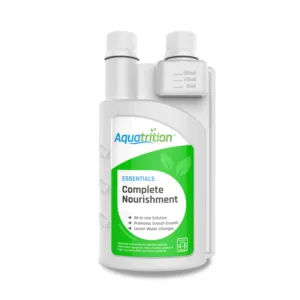
A powerful all-in-one aquarium plant fertilizer, perfect for tanks with mixed plants. It delivers a balanced dose of all key macro and micronutrients, eliminating guesswork. Ideal for hobbyists looking for a simple, effective solution to promote lush growth and vibrant colors.
✅ Great for:
- Beginners with low to moderate lighting setups
- Busy hobbyists who want one easy dose
- Tanks with carpeting and rooted plants
Tailored for tanks with medium to high plant load or high lighting. This formula allows for more precise control over nutrient levels, helping serious hobbyists optimize growth and coloration.
✅ Best for:
- Aquascapers using CO₂ injection
- Medium to high-demand plants
Customizable dosing schedules


Not ready to install a CO₂ system? No problem! Liquid Carbon offers a safe and effective alternative for providing a source of CO₂ for aquatic plants, especially in low-tech aquariums. It boosts photosynthesis, discourages algae growth, and supports healthier plant development.
✅ Ideal for:
- Low-tech tanks without CO₂
- Shrimp-safe, fish-safe carbon supplementation
- Combating algae in planted aquariums
VI. Understanding CO₂ for Aquarium Plants
Understanding CO₂ is key to unlocking the full potential of our underwater garden. Whether we’re just starting out or planning a high-tech aquascape, knowing how CO₂ affects plant growth can help us make informed choices and avoid common pitfalls.
Why Is CO₂ Important in Planted Aquariums?
Just like terrestrial plants, aquatic plants need carbon dioxide for photosynthesis the process that allows them to convert light into energy. In nature, flowing rivers and streams constantly replenish CO₂. But in a closed aquarium, CO₂ levels can be limited, especially if there’s little surface agitation or no injected gas.
Here’s why CO₂ is so crucial:
- Boosts plant growth and color vibrancy
- Supports healthy root development
- Increases plant resistance to algae and nutrient deficiencies
- Helps create a balanced, self-sustaining ecosystem
Without adequate CO₂ especially in tanks with high lighting plants may struggle to grow, leading to algae outbreaks and poor overall health.
CO₂ vs. Non-CO₂ Aquarium Plants: What’s the Difference?
When selecting plants, it’s important to know whether they thrive with or without supplemental CO₂.
🌿 CO₂-Demanding Plants:
These plants grow rapidly and need additional carbon to keep up with their energy use.
- Examples: Hemianthus callitrichoides (HC Cuba), Rotala species, Glossostigma elatinoides
- Require:
- High light
- Pressurized CO₂ or Liquid Carbon
- Regular fertilization
🌿 Non-CO₂ Aquarium Plants:
These species grow slowly and are ideal for beginners or low-tech tanks.
- Examples: Anubias, Java Fern, Cryptocorynes, Vallisneria, Amazon Sword
- Thrive in:
- Low to moderate light
- No CO₂ injection (but benefit from liquid fertilizers)
- Stable water conditions
VII. Common Challenges & Solutions in Planted Aquariums
Even with the right setup and good intentions, planted aquariums can sometimes throw a few surprises. Two of the most common struggles – algae growth and nutrient deficiencies can frustrate even experienced hobbyists. But with a little understanding and the right tools, these problems are not only manageable but preventable.
Let’s explore what causes them and how they can be tackled effectively.

- Algae Control
Algae is one of the most common issues in planted tanks, and while a little alga is natural, too much can quickly take over the glass, plants, and hardscape. It thrives on excess light and nutrients, especially when the aquarium plants aren’t growing fast enough to use them up.
💡 Common Types of Algae:
- Green Spot Algae: Small, hard green dots on glass or slow-growing leaves
- Hair Algae: Stringy, thread-like growth around aquarium plant leaves
- Brown Diatoms: Dusty brown coating, common in new tanks
- Blue-Green Algae (Cyanobacteria): Slimy sheets; not true algae, but a sign of imbalance
✅ Causes:
- Too much light or leaving lights on for too long
- Inconsistent CO₂ or poor flow
- Nutrient imbalances—either too much or too little
- Lack of fast-growing aquarium plants to compete with algae
🛠️ Solutions:
- Reduce lighting period to 8 hours per day
- Increase plant mass to outcompete algae
- Maintain stable CO₂ levels (use Liquid Carbon for low-tech tanks)
- Perform weekly water changes (20–30%)
- Remove algae manually during maintenance
- Add algae-eating species (Amano shrimp, Otocinclus, Siamese algae eaters)
- Nutrient Deficiencies and Their Signs
Aquarium plants need both macro and micronutrients to grow properly. When any one of these is missing or unbalanced, aquarium plants will show visible signs—kind of like the tank’s way of waving a red flag.
Learning to read these signs can help you fix problems before they get worse.
📋 Common Deficiencies & Symptoms:
Nutrient | Deficiency Sign | Fix |
| Nitrogen (N) | Yellowing of older leaves, stunted growth | Dose Elemental Nitrogen |
| Phosphorus (P) | Dark or purplish leaves, slow growth | Add Elemental Phosphorus |
| Potassium (K) | Pinholes in leaves, browning edges | Use Elemental Potassium |
| Iron (Fe) | Yellowing of new leaves, pale growth | Supplement with Iron Plus |
| Micronutrients (Zn, Mn, B) | Deformed or discolored new growth | Try a comprehensive dose of Trace Plus |
VIII. Maintenance Tips for a Thriving Aquarium
A planted aquarium isn’t just a set-it-and-forget-it hobby—it’s a living, evolving ecosystem. To keep your underwater world lush, balanced, and beautiful, regular maintenance is essential. With the right routine, caring for your tank becomes easy and even enjoyable!
Here are three key areas of maintenance to focus on for long-term success:

1. Regular Trimming and Pruning
Just like a garden, the aquatic plants need trimming to stay healthy and look their best. If left unchecked, some species can grow too tall, block light, or overshadow slower-growing aquarium plants.
Why Trimming Matters:
- Encourages bushier, denser growth
- Prevents aquarium plants from competing for light
- Keeps your aquascape looking clean and well-structured
- Removes damaged or dying leaves that can decay and pollute the water
Tips:
- Use sharp aquascaping scissors to trim stem aquarium plants like Rotala, Ludwigia, or Hygrophila just above a leaf node.
- Remove yellowing or algae-covered leaves to improve overall plant health.
- Replant trimmed tops of stem plants to create new growth zones.
Aim to trim your aquarium plants every 1–2 weeks, depending on their growth rate.
2. Water Changes and Cleaning Schedule
Even in the most balanced aquariums, organic waste builds up over time. Regular water changes are the single most important habit to keep the water clean, stable, and algae-free.
Weekly Tasks:
- Change 20–30% of your tank’s water once a week
- Use a gravel vacuum to gently remove debris from the substrate
- Wipe down aquarium glass to prevent algae buildup
- Rinse filters (in old tank water) every 2–4 weeks—don’t use tap water, as it can kill beneficial bacteria
Water changes also help reset nutrient levels, remove excess organics, and prevent the buildup of toxins like nitrates.
3. Fertilizer Dosing and Monitoring
To keep the aquarium plants growing strong, they need a steady supply of nutrients. Think of fertilizers as aquarium plant food—when dosed correctly, they power lush growth and vibrant colors.
Best Practices:
- Dose fertilizers daily or weekly, based on your tank’s needs and light level.
- Watch for nutrient deficiency symptoms in aquarium plants like yellowing leaves, holes, or poor growth.
- Test water parameters periodically for nitrate, phosphate, and iron levels if it’s a high-tech or heavily planted tank.
IX. Conclusion
Creating and maintaining a freshwater planted aquarium is one of the most rewarding hobbies one can take up—it brings the beauty of nature indoors, promotes relaxation, and fosters a deeper connection with living ecosystems. From selecting the right aquarium plants to understanding light, CO₂, and nutrients, every step helps build a thriving aquatic world that you can enjoy for years.
Whether one is just starting your first tank or leveling up the aquascaping skills, remember: consistency, patience, and the right care go a long way. With regular maintenance, balanced fertilization, and a little trimming here and there, any tank can flourish into a lush, vibrant underwater garden.
Happy planting! 🌱🐟
Frequently Asked Questions (FAQs)
What are the best beginner aquarium plants?
Great beginner options include Java Fern, Anubias, Vallisneria, and Amazon Sword. These hardy species require minimal CO₂ and lighting.
Do aquarium plants need fertilizer?
Yes, aquarium plants need essential macro and micro nutrients. Use Aquatrition’s Complete Nourishment for balanced daily care.
Can aquarium plants grow without CO₂?
Yes! Many plants thrive in non-CO₂ tanks using natural respiration and liquid carbon. Read our blog on non CO₂ planted tanks.
Which substrate should I use in a planted tank?
Nutrient-rich substrates support root growth. Inert ones like sand or gravel need supplementation with root tabs or liquid fertilizers.
How do I dose fertilizers in a planted aquarium?
Follow label instructions. For simplicity, try All-in-One Aquarium Fertilizers like Aquatrition’s Optimum Nourishment or the Estimative Index Kit.”
What are signs of nutrient deficiency in aquarium plants?
Yellowing leaves may indicate nitrogen deficiency, while transparent leaves suggest a potassium issue. Use Trace Plus for micronutrient balance.